

Designing a booking system for how people actually think
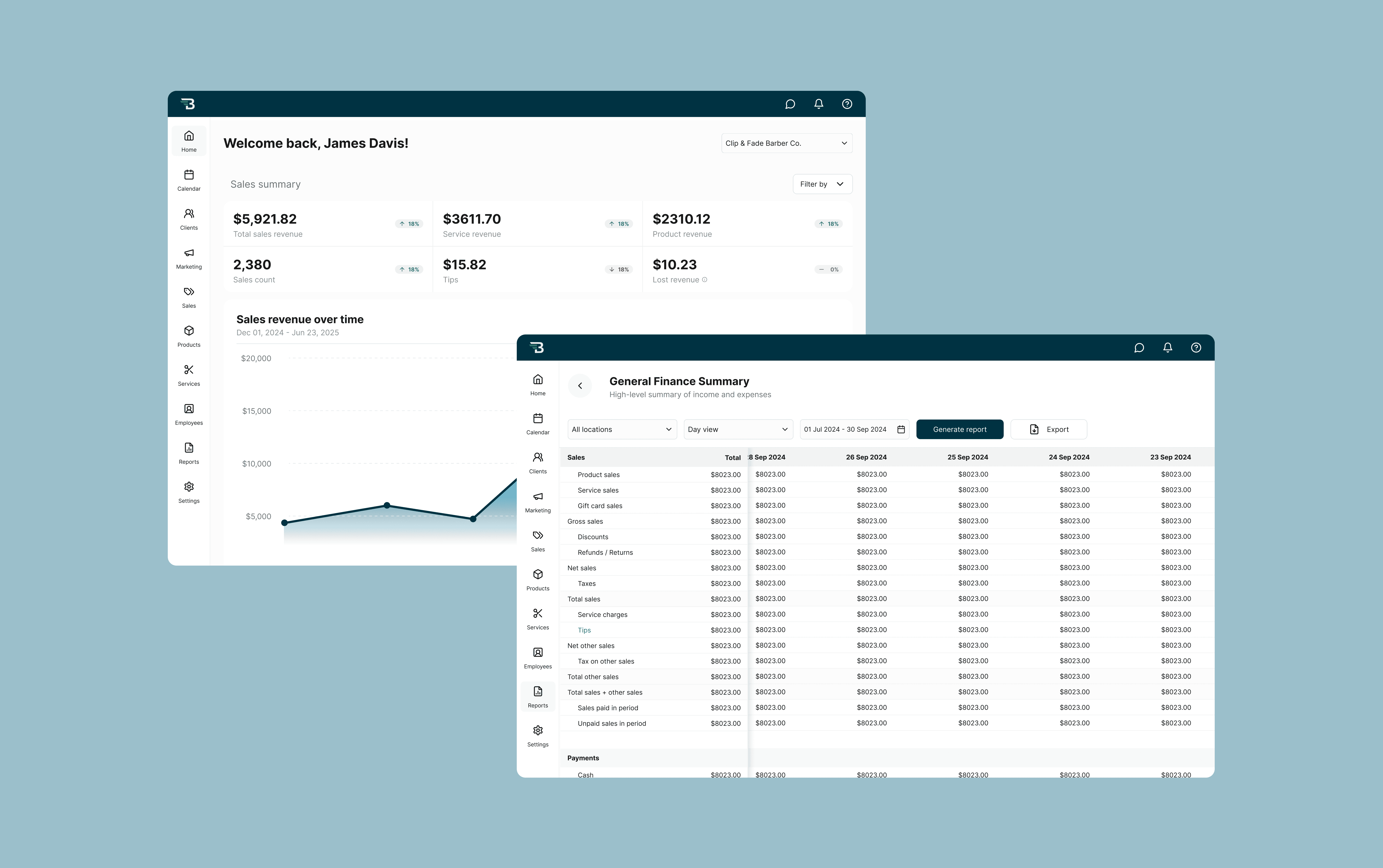
Barber-OS is a business management platform built by a barbershop tools supplier expanding into software. I joined as the sole designer when it was a developer-led prototype, and early beta feedback showed the experience felt disjointed and confusing. Over 1.5 years, I redesigned 19+ feature areas; this case study focuses on the customer booking flow, a core touchpoint that drives scheduling and revenue.
THE PROBLEM
People don't all think about booking the same way
On the surface, booking seems simple: pick a service, pick a person, pick a time. But through competitive research and beta tester feedback, the complexity became clear.
Service-first customers
"I need a haircut"
Knows what they need, doesn't have a preferred barber. Might be new, or just wants whoever's available soonest.
Staff-first customer
"I want to see Marcus"
Has a relationship with a specific barber and will rearrange their schedule to see that person. Independent barbers need personalized booking links.
PLUS THESE EDGE CASES
Multiple services, different durations
Different staff per service
Group appointments
Multiple locations
Every time slot shown must guarantee all selected services can be completed. No dead-end bookings.
RESEARCH
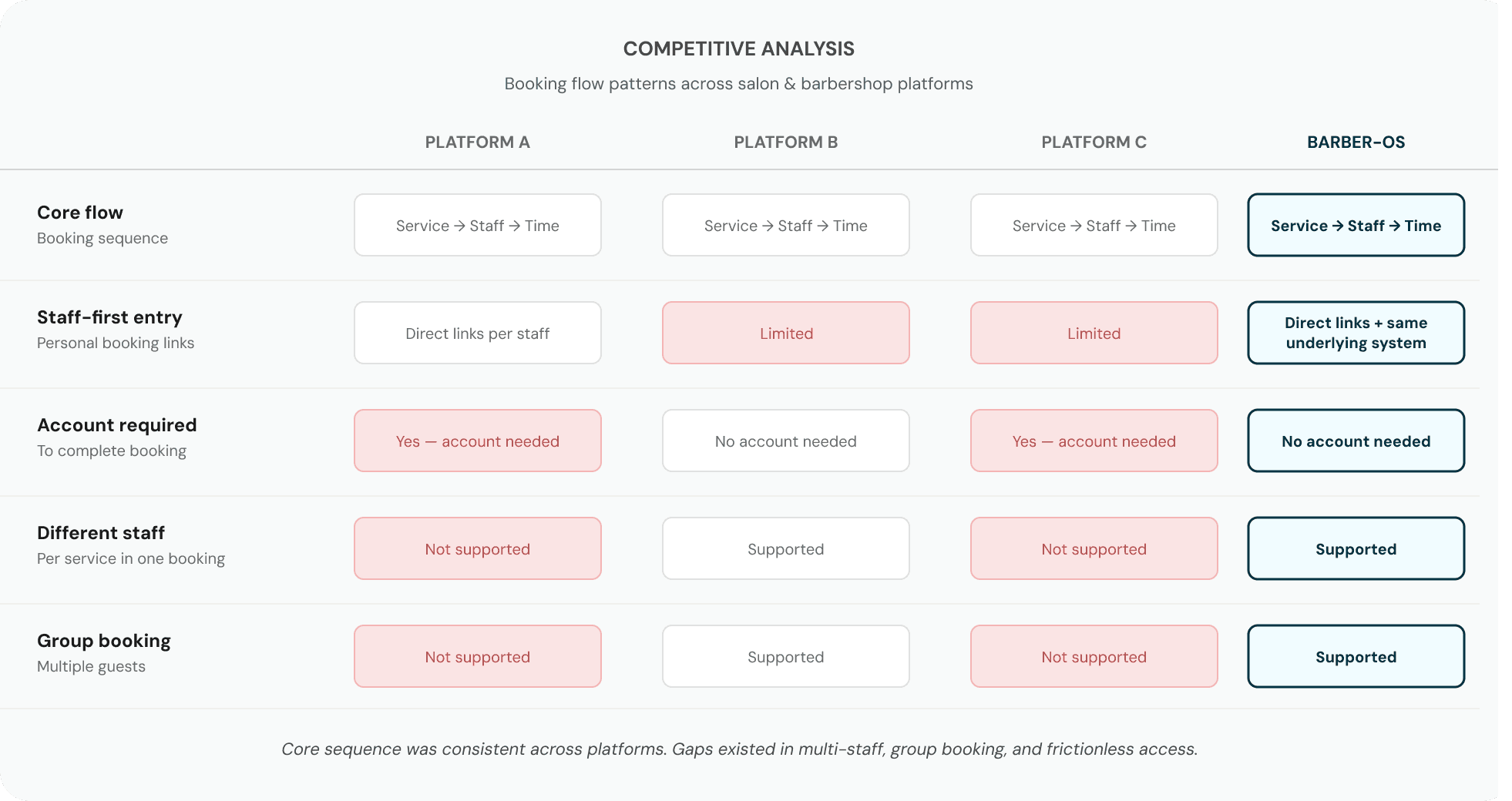
Identifying patterns and gaps across existing platforms
DESIGN DECISIONS
Building flexibility into a familiar structure
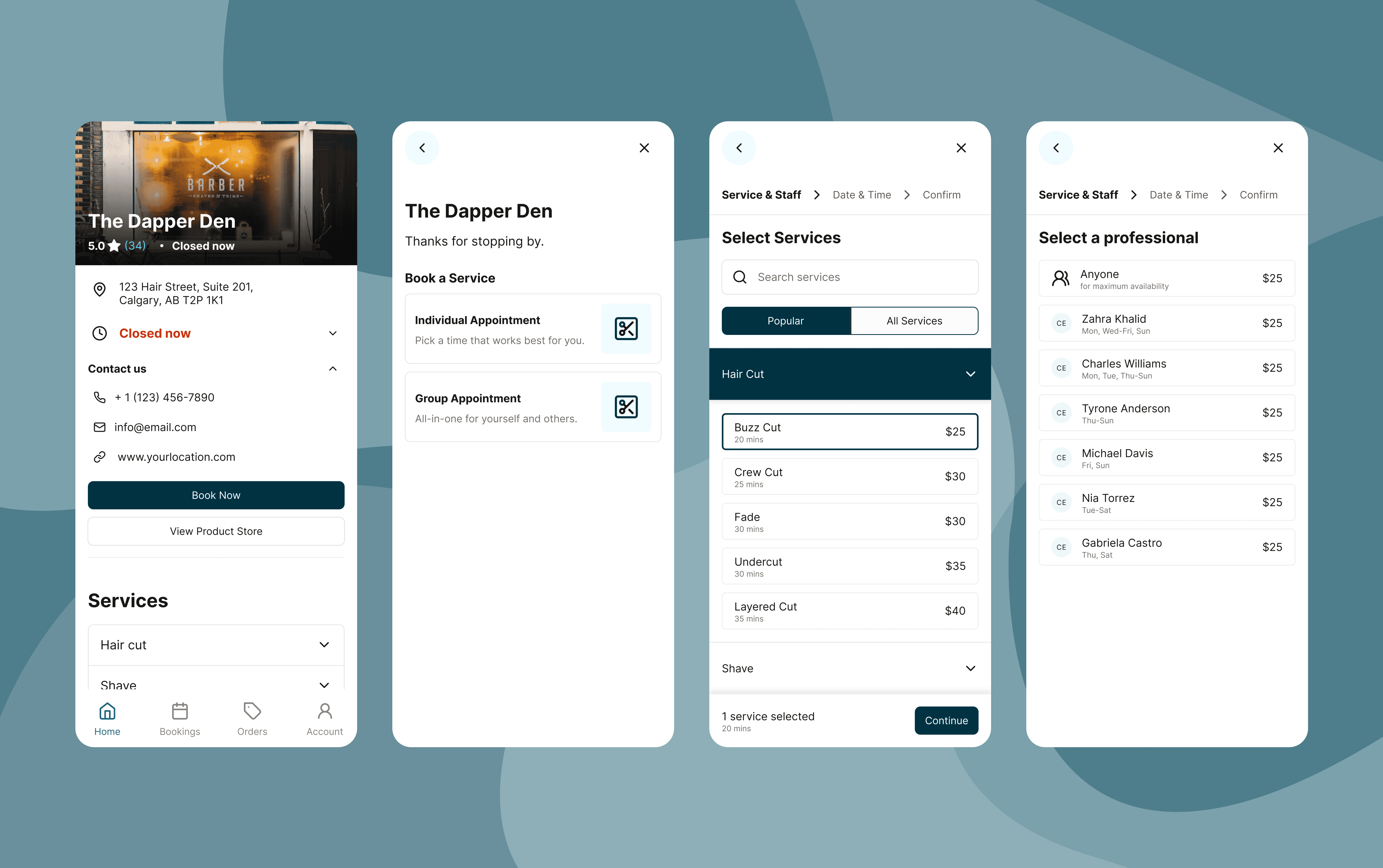
The core sequence — Service → Staff → Date & Time — follows a proven pattern. The real design work was in the flexibility and logic underneath it.
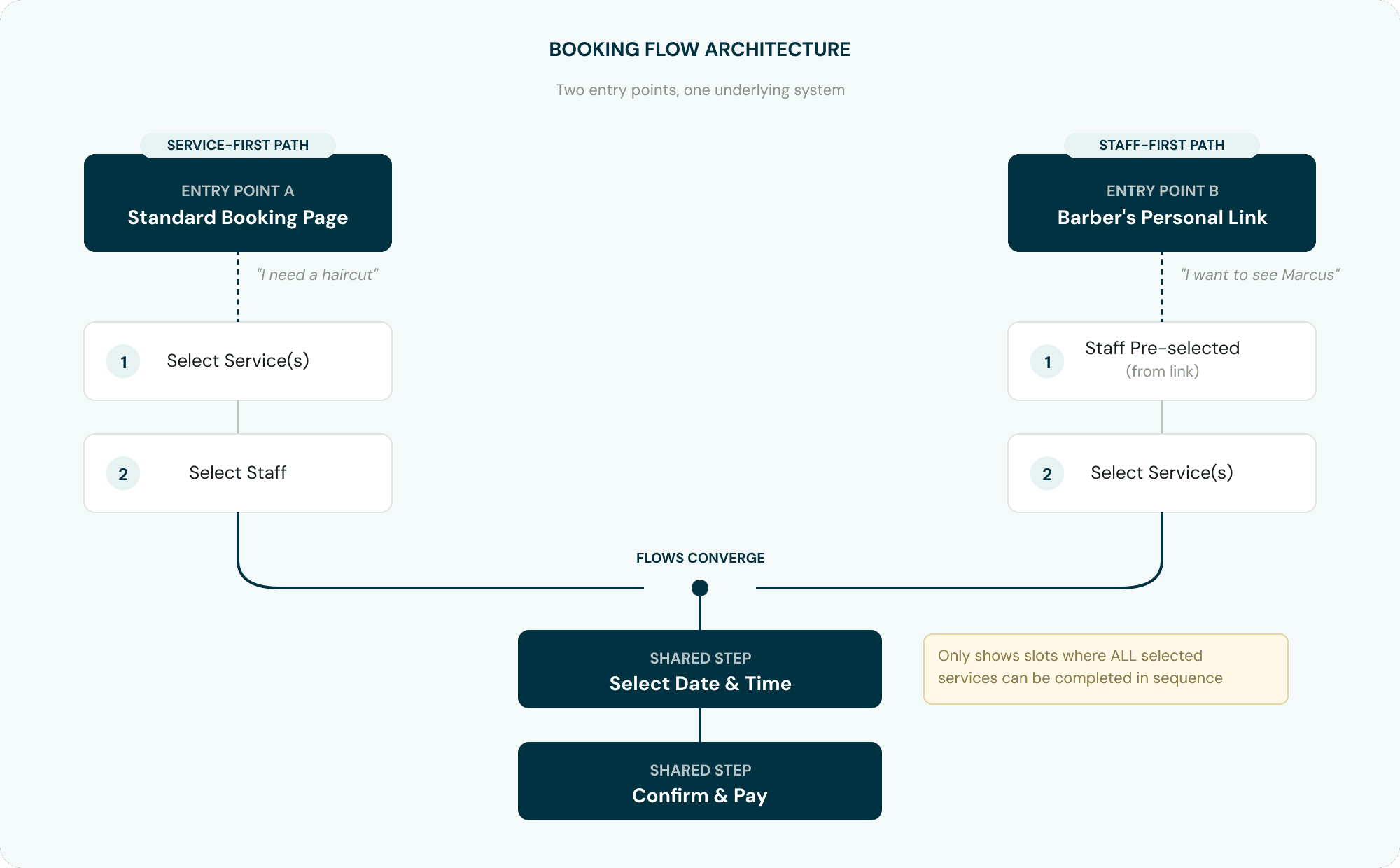
Flexible entry points, one system
Service-first and staff-first paths enter the same underlying flow, no duplicate systems.
Multi-service, multi-staff booking
Different staff per service in one session. Only valid time slots are shown.
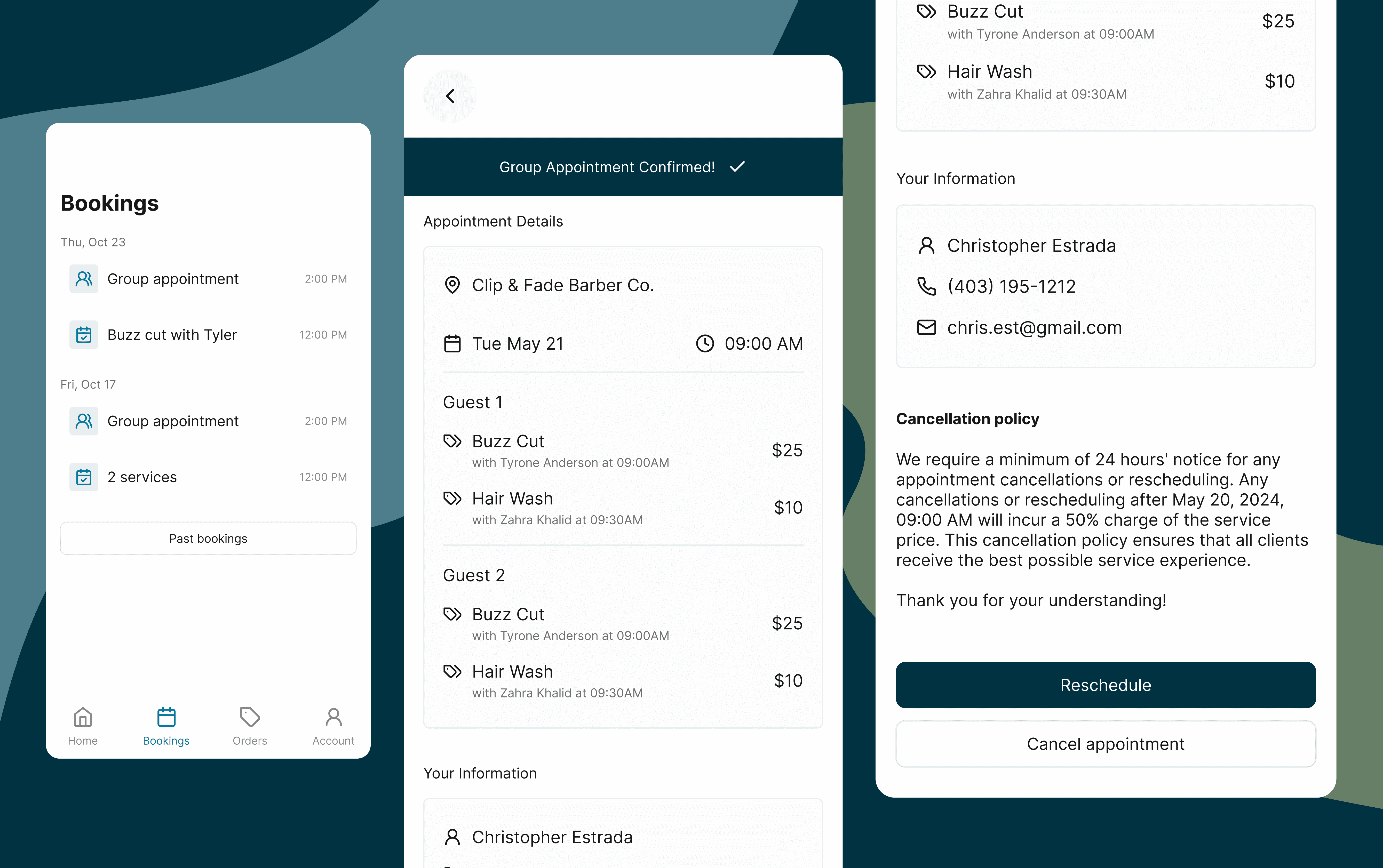
Group appointments
Multiple guests in one session, one confirmation to cover everything.
Time slots grouped by time of day
Slots grouped by Morning, Afternoon, Evening. Plus a "jump to next available date" shortcut.
THE ADMIN SIDE
Giving barbershop owners control over their booking experience
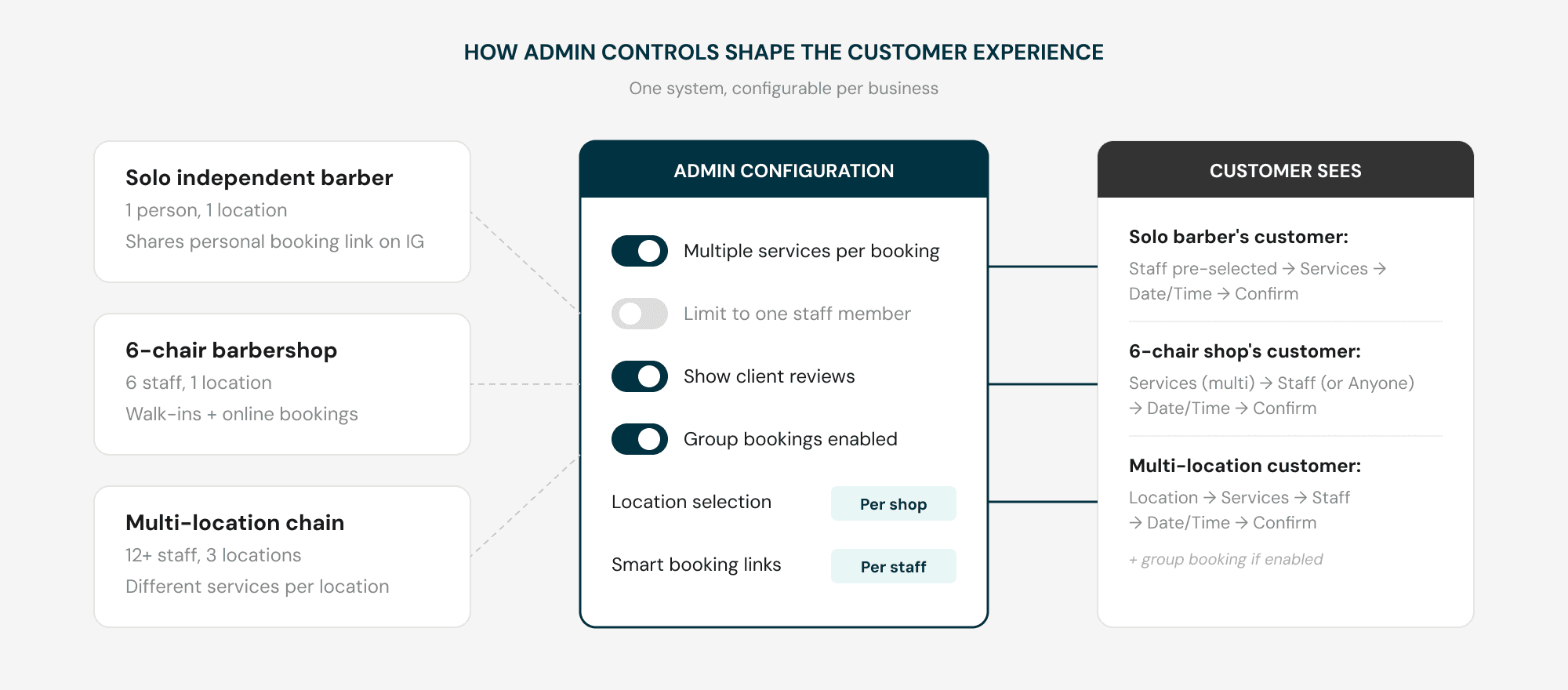
The customer-facing flow was only part of the problem, barbershop owners also needed control over how their booking page worked, and those needs vary widely by business size.
I designed a guided setup flow (Business Info → Team → Preferences) that lets owners configure options like multi-service booking, staff assignment rules, and review visibility, alongside an analytics dashboard tracking booking traffic, conversions, and performance across locations.
This allowed each shop to tailor the booking experience without requiring different product configurations, the same system flexes to fit.
CONSTRAINTS & TRADEOFFS
Technical architecture
The data model had been built before I joined. The way services, staff, and time slots were structured created a natural preference for the Service → Staff → Time sequence. Rather than fighting the existing architecture, I designed the flexible entry-point approach to support both mental models within the constraints of the current system.
Scope cuts
I'd designed a full post-booking management flow — customers could modify services, change staff, or reschedule. Development resources meant we shipped view-and-cancel only. The design work informed future phases and clarified the minimum viable post-booking experience.
THE BROADER PLATFORM
What the booking flow was one piece of
Over 1.5 years, I designed end-to-end experiences across every feature area of the platform:
Scheduling
Calendar, shifts, breaks, closures
Point of Sale
Express checkout, cart, payments
Clients
Profiles, history, import/export
Marketing
Campaigns, automations, dynamic pricing
E-commerce
Product store, commissions, support
Employees
Staff, pay runs, schedules
Analytics
Sales, bookings, campaign performance, revenue
Products
Inventory, stock orders, stock takes, suppliers
Apps
Booking pages, landing pages, BOS App
Outcomes
10+ barbershops adopted the platform for daily operations, transitioning from paper systems and disconnected tools.
Independent barbers chose Barber-OS over established competitors, citing competitive pricing with strong feature coverage.
Owners responded most strongly to capabilities they'd never had before — marketing campaigns, booking analytics, and smart booking links that turned a scheduling tool into a business growth platform.
